
Here's a growing range of electronic items for the aeromodeller...
Tempo Cardinal
Configured by an Android app, this electronic timer controls the power of a brushless electric motor powering a free flight model.
Not available for Apple ( sorry).
Suitable for brushless motors only.
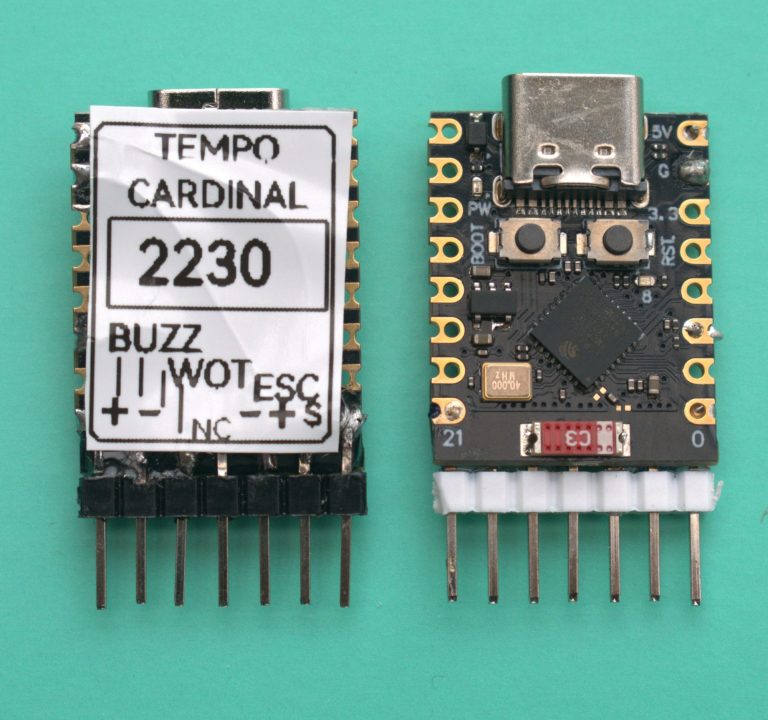
Weighing in at just 2.4g, this microcontroller is installed in a free flight model aircraft powered by a brushless electric motor (separate ESC required) running on 2 or more LiPo cells. It is NOT suitable for use with a single LiPo battery.
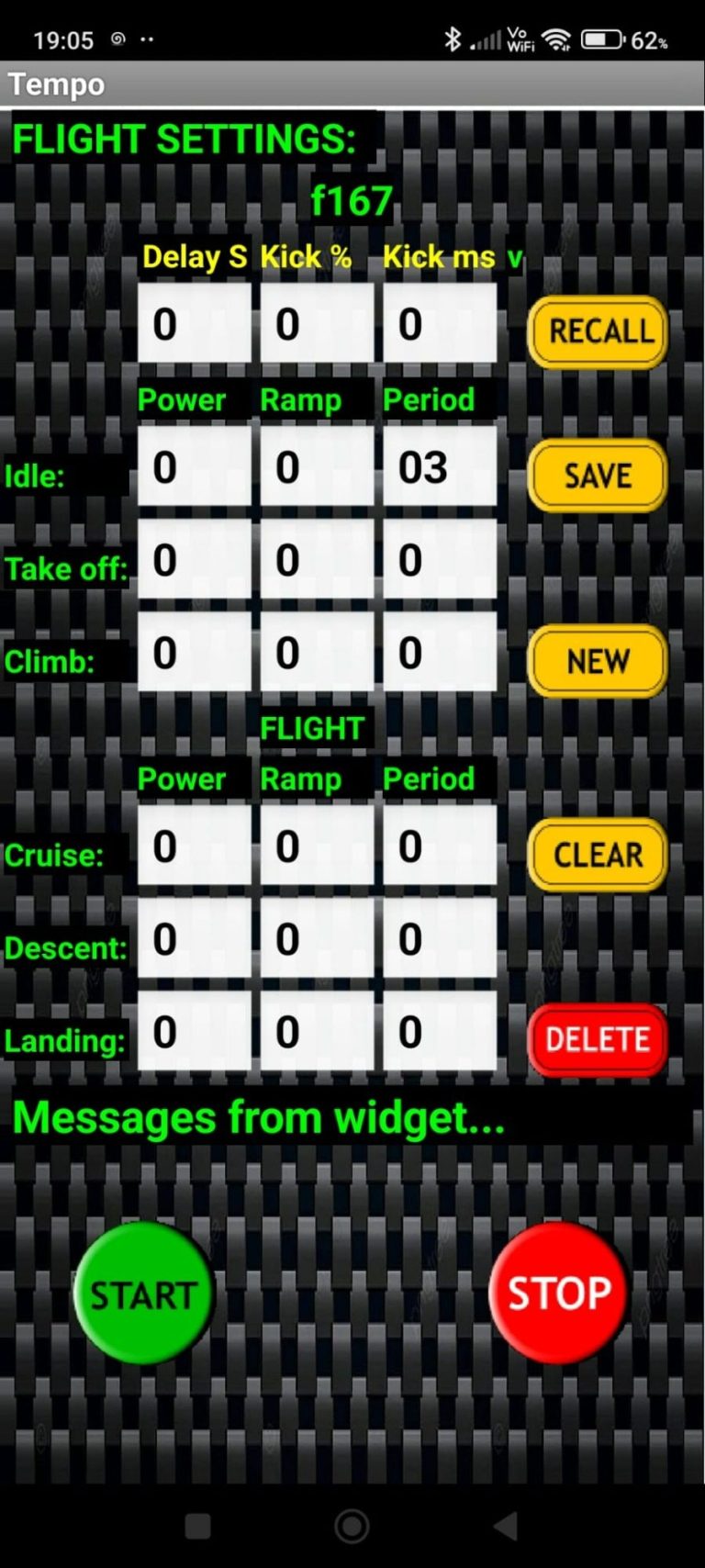
You may enter the details for up to 7 flight phases, controlling power, duration, and the time to ramp from one phase to the next - no sudden power changes.
Pressing START will transmit these parameters to the Tempo, which will then commence the flight.
This is NOT the same as radio control, as the user has no control over the model, other than an emergency stop.
You simply connect the Tempo to the ESC, using the cable that would normally connect to a radio receiver.
Downloads:
Download the Tempo User Guide for full details:
Download the Android app:*
Scan the code, or click on it.
* The Tempo app was created using the excellent MIT AppInventor browser based Android editor. Download the APK file from the above link and install - please select the 'Install anyway' message (or similar).
- Download the APK file from the above link and open it to install on your device
- Your installer may query the installation of an app from 'unknown sources'
- Please click whatever options are required to 'Install anyway'
Features:
- 7 definable flight phases Delay, Idle, Take off, Climb, Cruise, Descent, Landing
- Definable ramp time between phases
- Hidden installation - no need for access
- Any number of model memories
- Consistent flight performance
- Highly useful for power trimming - just set a short, single power burst
- Emergency STOP - over a short range, the flight may be terminated
- Optional beeper - useful for outdoor models over long grass, sounds after a delay
- ESC calibration
- PIN protected - each Tempo has a unique code number allowing secure connection
Specifications:
- Microcontroller: ESP32-C3 Supermini
- Weight: 2.4g
- Length 32mm, Width: 18mm, Height: 4mm
- Power: 2-3s Lipo with BEC equipped ESC
- Current: Approx 30ma
Kit version:
If you're handy with a soldering iron, the Tempo is available in kit form. Assembly is simply a matter of soldering 4 fine wires between a row of header pins and pcb contacts. Full details will be found in the User Guide below.


Development history...
It was during our winter indoor flying sessions that friends brought along free flight models - but instead of the traditional rubber motors, these models had electric motors. The advantages of using electric motors include consistent power levels - making trimming that much easier, precise setting of the power - and it's a lot less effort than rubber motors.
The drawback is that some form of device is needed, to provide a timed motor run. There are several alternatives for this, each with their pros and cons, but there wasn't available a device that could be hidden within the model without requiring access, and providing flexible, precise control over a motor run.
The ESP32-C3 Supermini was selected as the smallest Bluetooth equipped microcontroller available and, eventually, the first flight of a model with the widget aboard took place. The model selected was the classic Veron Cardinal, hence the name of this version of the Tempo.
Normally powered by a small diesel or glow 2 stroke engine, this Cardinal had a brushless electric motor, ESC and 2s 300mah LiPo battery, with the Tempo connected to the ESC in place of the normal radio receiver. After the usual test glides, followed by some powered glides, the motor was programmed with the app to give just a 10 second burst of 80% power - replacing the usual technique of a short, undercompressed diesel engine run, in order to begin powered flights. This is where the usefulness of the Tempo really appeared, allowing a careful, consistent progression of powered flights, leading up to successful, quiet and easy free flight model flying.